Our mission is to bring Africa and Spain closer
Through outreach, educational, economic, and cultural activities, we foster mutual understanding and strengthen Hispanic African relations.



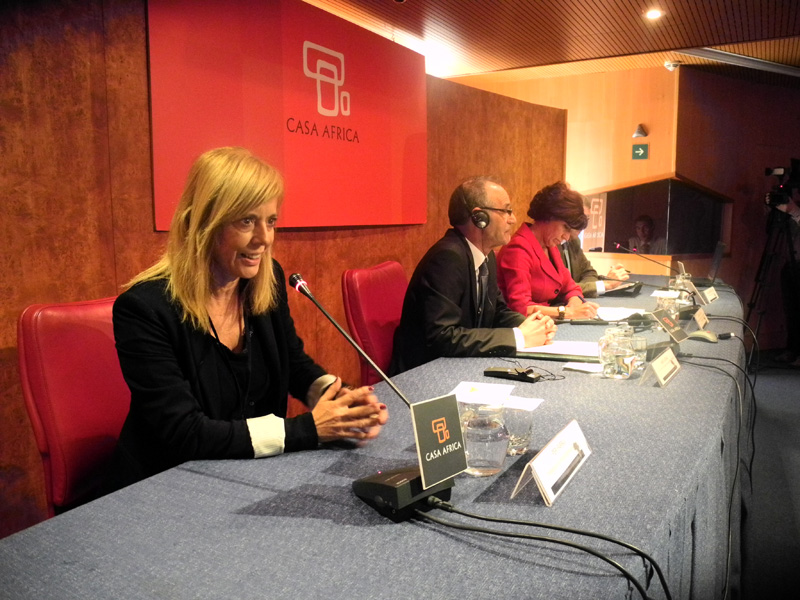
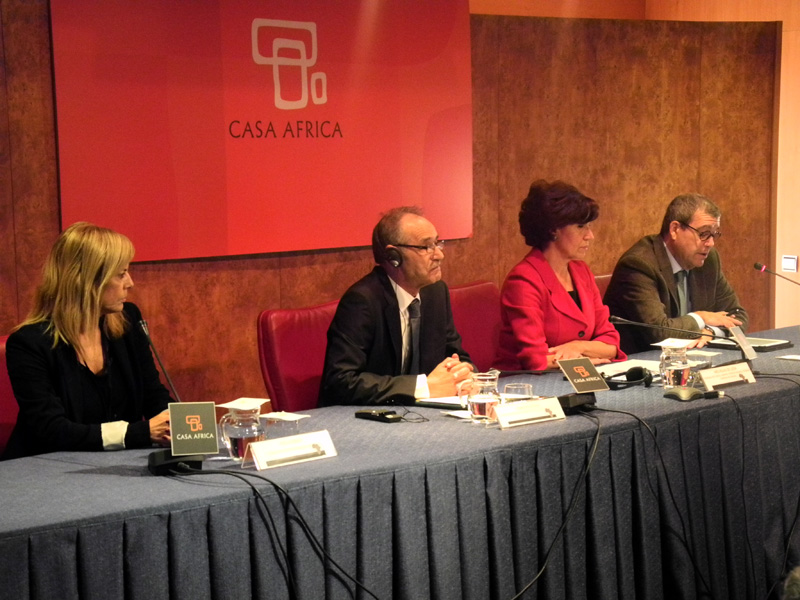
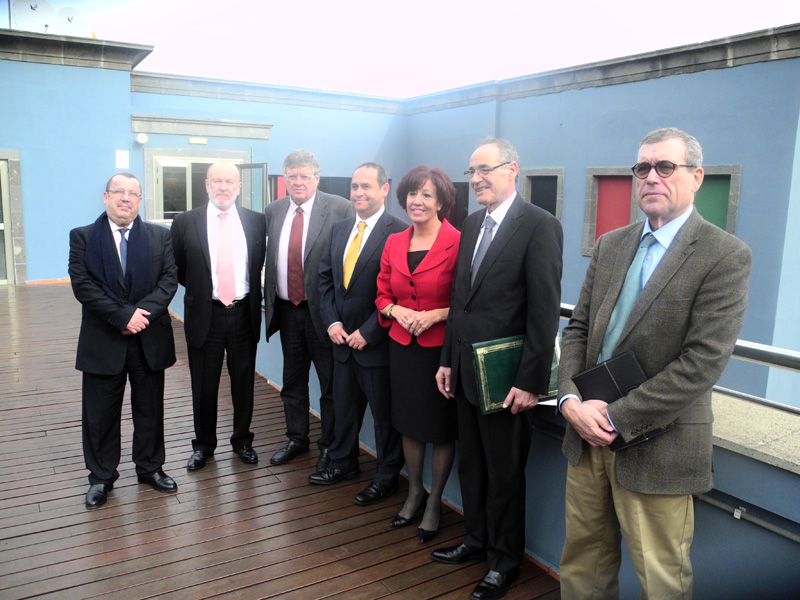
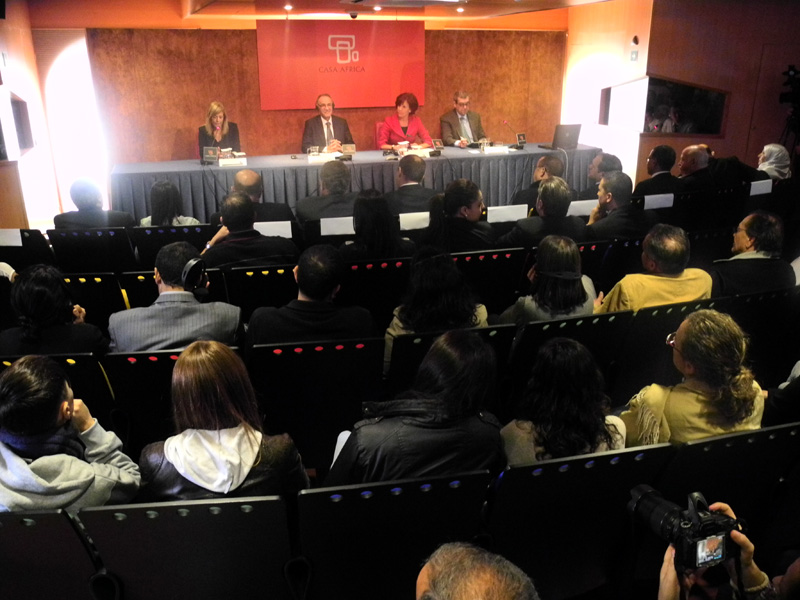
"We want to be Africa, not just geographically, and the best tool to achieve it is culture. The written word brings together desires, dreams, shortcomings and difficulties of a people. And its writers are the best ambassadors of a country." With these words the Ministry of Culture for the Government of the Canary Islands, Inés Rojas, this morning opened the fourth edition of the International African Book Fair , SILA, accompanied by the Secretary General for the Ministry of Culture of Morocco - guest country- Ahmed Guitaae; Casa África's general director , Santiago Martínez-Caro, and the president of the organiser committee, Josefa Farray.
With reference to the guest country, the minister said that recent strong relations have allowed us to get to know the real Morocco, "the privileged partner that it is, a people that advance and are therefore more and more happy; and we like to live with a happy people- she continued - and if SILA is useful to provide its grain of sand then it will have fulfilled its objective," she stated.
Words that were appreciated by Ministry's Secretary General, who highlighted the importance of this event in Morocco's book sector and also in disseminating its culture.
Santiago Martínez-Caro, in turn, on behalf of Casa África thanked the organiser committee for suggesting that this fourth edition be held there, and as usual was more than the mere host, joining in with its own efforts: including in the programme its 4th Librarianship Meeting , the African letters programme and a cycle of Moroccan films which will be opened this afternoon at the Multicines Monopol at 20:30 with the screening of Al Jamaâ, presented by the Moroccan critic Abdellatif Elbazi.
Josefa Farray at the same time thanked the Moroccan delegation and Casa África for not having doubted in joining the project and stressed its transnational cooperation character.
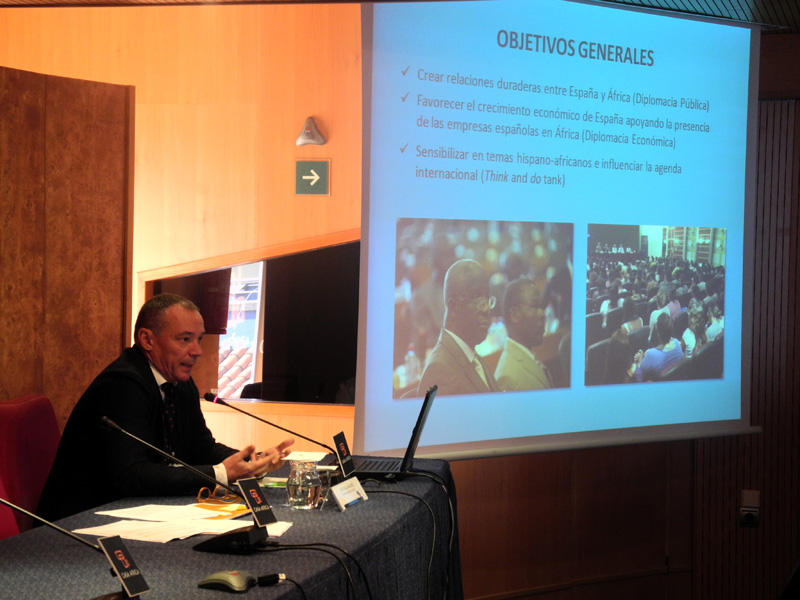
In Casa África's courtyard several tables brought together a thousand books from publishers that were not only Moroccan but also Spanish translations of African writers or books published about African subjects. Next to these tables this morning, there was a tasting of Moroccan sweets and then the Fair was opened. This was done with a conference by Luis Padilla, Casa África's Director General, talking about the institution's role in the dissemination of African literature and culture.
Pioneering activity
Meanwhile, in the video-conferencing hall, the writer from the Canary Islands Carlos Álvarez fired the starting pistol of Sila Connects together with the Senegalese writer Abasse Ndioye. One, from Las Palmas of Gran Canaria, and the other from the Office for Technical Cooperation of the Spanish Embassy in Dakar, who formed part of this activity that the journalist José Naranjo classified as "pioneering": putting in contact writers of two coasts through video-conferencing.
And thanks to technology both could have a passionate talk that was based on thrillers, a topic both have covered, but that also went onto the intricacies of politics, as this is still part of the reality that inspires both of them in their novels.
The editor's turn
Afterwards the first activity called 'The Editor's corner' was held: a round table on the challenges of publishing in Morocco in which Nadia Essalmi, director and owner of the publishers Yomad, and Yacine Retnani, director of the bookshop Le Carrefour des livres took part.
Both of them are professionals who love their work but nevertheless encounter significant difficulties. One of them, they said is illiteracy. "There are few readers in Morocco; when I started my first children's publishers I thought they would snatch books off me, as there was nothing similar, but when this was not the case, I realised that although we are a young country, there is a lot of illiteracy, and that is a more serious problem." They also coincided in denouncing the unfair competition that there is in the distribution sector in Morocco. "There are less and less bookshops, because the few distributors there are sell the books directly to schools,institutions, companies or libraries," explained Retnani. "There is money for the book sector, it's not that there isn't investment, it's that it's badly distributed," he lamented. Essalmi, in turn, stressed disorganisation and to the question of does she believe there is a lack of political will she answered by asking for "research to get to know the situation, a policy for books, protection laws for the sector."
However, they recognised advances such as bringing in women, which Essalmi highlighted. And, above all, they reminded us that being a country with an oral tradition, books are an incipient industry " and with professionalism, with international meetings such as this, and with encouragement, we will get things to change."
The Fair continues this afternoon with another round table on literature in Morocco, the presentation of the poems Actuales señores feudales, by Adolfo García García, presented by Aquiles J. García Brito, president of NACE (New Association in the Canary Islands for Publishing) and the round table Women's dialogues and literature in which the writers Silvia García and Teresa Iturriaga Osa, among others will take part.
The International African Book Fair is an initiative that is part of the Transnational Cooperation Programme Madeira Azores Canary Islands PCT MAC 2007-2013, 85% of it is co-funded by the Feder Fund and the Canary Islands Government. SILA's members are, besides the Canary Islands Government, the Ministry of Culture of Morocco, and Senegal, and the Instituto da Biblioteca Nacional e do Livro of Cape Verde.
Imágenes, vídeos y audios relacionados

C/ Alfonso XIII, 5.
35003 Las Palmas de Gran Canaria. España
Tel.: +34 928 432 800
Email: info@casafrica.es